
SPECIALIST SEARCH MARKETING FOR CARPENTRY BUSINESSES
SEO For Carpenters That Generates More Leads, Quotes and Profitable Projects
We help UK carpentry businesses generate more qualified leads, quote requests and higher-value projects by connecting them with customers actively searching for their services in the areas they serve. Using SEO, local search optimisation, AEO and GEO, we make your business, services, locations and completed work easier to discover across Google Search, Google Maps and AI-powered search experiences so more relevant customers find you, trust your expertise and request a quote.
Team
Driven
Helped
on Google
Generated
Rate
SEO
Helped
on Google
Generated
Rate
SEO
Why Your Carpentry Business Is Not Getting Enough Leads From Search

01 — Your Key Services Are Hard to Find
A general carpentry or joinery page can hide the commercial differences between fitted furniture, cabinetry, staircases, bespoke joinery, structural carpentry and other specialist work. When those services are not represented clearly, search systems receive weaker signals about which customer requirements your business is relevant for, while potential clients may not immediately see that you handle the project they need. The result can be lower visibility for valuable services, weaker enquiry quality and missed quotation opportunities.

02 — You Are Weak in Key Service Areas

03 — Customers Cannot See Enough Project Proof
Customers commissioning fitted furniture, cabinetry, staircases, bespoke joinery or other substantial work usually want evidence that you have completed comparable projects before requesting a quotation. Limited project photography, weak case studies, few reviews, thin company information or no clear examples of completed work create uncertainty at the point of comparison. Search may bring the customer to your website, but stronger evidence is often what determines which carpenter or joiner receives the enquiry.

04 — You Are Attracting the Wrong Jobs
Not every carpentry enquiry has the same commercial value, and higher traffic can become a distraction if it mainly produces small repairs, unsuitable locations or low-value work while the business wants larger fitted, bespoke, renovation or contract projects. Search strategy should therefore begin with the jobs you actually want to quote for and build stronger relevance around those requirements. The objective is valuable project demand → relevant service → qualified enquiry → quotation opportunity, not simply more carpentry-related searches.

05 — Your Google Business Profile Is Underperforming
For local searches, your Google Business Profile can influence both whether your company appears and whether a customer considers contacting you. Inaccurate or incomplete business information, weak category selection, limited service detail, few recent reviews and poor project imagery can make the business less relevant and less convincing than nearby competitors. A stronger profile should clearly reinforce what work you provide, where you operate, what completed projects look like and why customers trust your company.

06 — Your Website Is Not Converting Enough Enquiries
Visibility alone does not create revenue; the website still needs to reduce uncertainty and make the next step obvious. A suitable customer should be able to establish quickly what work you undertake, whether you cover their location, whether you have completed similar projects, what evidence supports your expertise and how to request a quotation. When those answers are unclear or difficult to find, visitors compare another business instead of progressing through search → evaluation → enquiry → quotation.
07 — You Rely Too Heavily on Lead Platforms
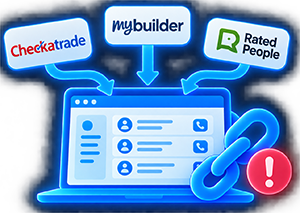
Referrals can produce valuable work and lead platforms can help fill capacity, but neither gives the business full control over demand, acquisition cost or competition for each opportunity. A stronger organic and local search presence creates an owned acquisition channel where potential clients can discover your company, review your projects, assess your reputation and contact you directly, reducing dependence on channels where several tradespeople may be competing for the same enquiry.

08 — Search Systems Lack Clear Business Context
Modern search systems need more than repeated references to “carpentry” or “joinery.” They need clear, consistent relationships between your business → services → specialist capabilities → projects → operating areas → evidence → reputation. When those relationships are fragmented, vague or compressed into generic pages, your business becomes harder to retrieve for specific commercial requirements. Strong carpentry SEO makes it explicit what you do, where you do it, what evidence supports it and which types of projects your business is relevant for.
How Customers Search for Carpenters
01 — Customers Search for the Project First
Most potential clients think about the work they need before the trade category itself. They may search for a carpenter or joiner, but they can also search directly for fitted furniture, cabinetry, staircases, doors, storage, structural carpentry or bespoke joinery. Your website therefore needs to make both relationships clear: business → trade and business → service.
02 — Search Intent Becomes More Specific
A broad search such as “carpenter” may indicate early research, while a query such as “fitted furniture carpenter in [location]” shows much stronger commercial intent. As the search becomes more specific, the relationship between service + requirement + location becomes clearer, which is why we prioritise terms that can realistically lead to enquiries and quotations rather than broad volume alone.
03 — Local Search Connects Service and Area
For many carpentry and joinery projects, customers need a business that can visit, measure, quote and complete the work within a genuine service area. Searches often combine the trade or service with a location or “near me” intent, creating the relationship service → business → operating area → customer location that your website and Google Business Profile should reinforce consistently.
04 — Customers Search for Specific Outcomes
Customers do not always use trade terminology such as “bespoke joinery.” They often search for the physical result they want, including fitted wardrobes, alcove storage, kitchen cabinetry, staircase renovation, shelving, media furniture, timber doors or outdoor structures. These project types should sit clearly beneath the broader carpentry or joinery category so search systems can understand the parent-child relationship.
05 — High-Value Projects Need More Proof
Customers considering substantial fitted, bespoke or commissioned work usually compare more than rankings. They may review completed projects, photography, customer reviews, service descriptions, operating areas, experience and quotation options before choosing a business. The higher the project value, the more important credible evidence becomes: being found creates the opportunity; being selected creates the enquiry.
06 — Google Maps Influences Local Decisions
For location-sensitive searches, customers may encounter your business in Google Maps or local results before they visit the website. Reviews, photographs, proximity, services and business information can shape the initial decision, while the website provides deeper project and company evidence. Both assets should reinforce the same relationship between local relevance, trust and commercial capability.
07 — Referrals Still Lead to Search
A referral does not remove the need for a strong online presence. Someone who receives your name from a previous customer may still search for the business to confirm your services, operating area, completed work, reviews and credibility before making contact. Search therefore supports both new customer discovery and referral validation.
08 — AI Search Adds Another Discovery Route
AI-assisted search, answer engines and retrieval-driven systems create additional ways for customers to discover businesses, but they still depend on clear information about business → services → projects → operating areas → expertise → evidence. The goal is to make the same legitimate carpentry business easier to understand and retrieve across both conventional and AI-assisted discovery environments.
09 — Every Search Needs the Right Destination
A customer searching for a staircase, fitted furniture or another specific project should reach a page that clearly matches that requirement rather than a generic page covering every service equally. The strongest structure connects customer requirement → relevant search → relevant page → project evidence → quotation enquiry, giving both customers and search systems a clearer path from intent to action.
What Our SEO Campaign for Carpenters Includes
A carpenter SEO campaign should do more than improve rankings. It should help the right customers discover your business, understand the work you provide, trust your experience and move confidently toward requesting a quotation.
We build each campaign around your priority services, genuine service areas, project value and lead goals, then strengthen the technical, local, content, authority and entity signals that help search engines, Google Maps and AI-driven discovery systems understand when your carpentry business is relevant.
The objective is clear: more qualified enquiries, stronger quotation opportunities and more of the carpentry projects your business actually wants to win.

01 — Search Demand and Lead Opportunity Mapping
We identify the searches most closely connected to the carpentry work you actually want to win, separating broad trade terms from higher-intent service, project and location searches. The campaign is then prioritised around customer need → search behaviour → relevant service → genuine service area → enquiry opportunity, giving the strategy a commercial direction instead of chasing keyword volume for its own sake.
02 — Local Search and Google Business Profile Optimisation
We strengthen your local presence so customers and search systems can clearly understand what your carpentry business does and where it genuinely operates. This includes Google Business Profile categories, services, service areas, project photographs, reviews, business information and relevant local citations, reinforcing the relationship carpentry business → service → location → qualified local enquiry across Google Search and Maps.
03 — Service and Project Relevance Optimisation
We structure the website so broader carpentry categories and individual project types are clearly connected rather than compressed into one generic service page. Parent themes such as residential carpentry, fitted work, bespoke work, exterior timber work or commercial carpentry can support more specific child services where commercially justified, creating a clearer hierarchy of business → service category → project type → customer requirement.
04 — On-Page and Content Optimisation
We strengthen the pages customers and search systems rely on to understand your services by improving titles, headings, service descriptions, project terminology, supporting content, contextual internal links and calls to action. The objective is not keyword repetition, but to give each important page a clear commercial purpose so users and retrieval systems can understand what the service is, who it is for and which requirement it satisfies.
05 — Technical Search Foundations
We improve the technical infrastructure required for important service, project and location pages to be crawled, indexed and retrieved reliably. This includes mobile usability, page performance, internal paths, duplicate or conflicting URLs, canonicalisation, structured information and image delivery. For carpentry websites with large project galleries, performance and image handling are particularly important because visual proof should strengthen the website rather than slow it down.
06 — Project Evidence, Authority and Trust
We turn completed work, reviews and relevant external recognition into stronger evidence that your business can deliver the projects it promotes. Project pages can connect service → project → location → materials → workmanship → result, while genuine reviews, relevant mentions, trade relationships and credible backlinks strengthen reputation and authority. This gives both prospective customers and search systems clearer evidence of real-world experience.
07 — Conversion and Quote Request Optimisation
We improve the journey from landing page to enquiry so suitable prospects can quickly understand what work you provide → whether you cover their area → whether you have relevant experience → how to request a quotation. Stronger project evidence, clearer service information, better contact prompts, simpler quote forms and reduced friction help turn relevant search visibility into genuine quotation opportunities.
08 — AI Search, AEO and Generative Discovery
We organise important business information so your carpentry company can be interpreted consistently across traditional search, answer engines, generative search and AI-assisted discovery. Clear relationships between business → services → projects → locations → expertise → evidence make the underlying entity easier to understand and retrieve when your company genuinely matches the customer’s requirement.
09 — Lead and Revenue Measurement
We measure performance against commercially meaningful outcomes such as qualified phone enquiries, website leads, quote requests, requested services and, where available, booked projects and revenue. Rankings, impressions and traffic remain useful diagnostic signals, but the campaign is ultimately judged by whether it produces a stronger flow of relevant enquiries for the carpentry work your business wants to win.
How We Structure a Carpenter Website to Generate More Enquiries
A carpenter website should reflect how the business actually operates. Services, projects, locations, proof and enquiry paths should connect through a clear hierarchy rather than exist as isolated pages.
We structure carpenter websites around business → service → project → location → proof → enquiry, so customers and search systems can understand how each part of the business connects.
The Main Carpentry Page Acts as the Parent
Service Pages Target Specific Customer Needs
Projects Provide Proof
Location Pages Show Where You Work
Internal Links Connect the Structure
Trust Signals Support the Enquiry
Every Page Should Lead Towards a Quote
Clear Structure Also Helps Search and AI Systems
Who Our SEO for Carpenters Is Built For
Carpentry businesses do not all compete for the same customers, project values or types of work. An independent carpenter serving homeowners has a different lead requirement from a fitted furniture specialist, a workshop-led manufacturer or a contractor pursuing larger commercial projects.
We shape the campaign around the type of carpentry business you operate, the customers you want to reach and the projects you want to quote for, so visibility is tied to commercially relevant demand rather than generic traffic.

Independent Carpenters

Bespoke Carpentry Businesses

Fitted Furniture and Cabinet-Making Businesses

Workshop-Based Carpentry Businesses
Workshop-based carpentry businesses are defined less by one service and more by how the work is produced. They may manufacture components, fitted furniture, cabinetry or specialist timber products off-site before delivering or installing them for the customer.
Their website should communicate production capability, workshop expertise, delivery or fitting coverage and finished project quality. This helps distinguish a workshop-led operation from a local carpenter whose service is primarily carried out on-site.

Kitchen and Interior Carpentry Businesses

Commercial Carpentry Contractors

Growing Carpentry Companies

The Customer You Want Matters as Much as the Service
Two carpentry companies can provide similar work while targeting very different buyers. One may focus on homeowners and landlords, while another may want developers, contractors, architects, property companies or commercial organisations.
We identify these buyer relationships before deciding what the website should target. This gives search and AI retrieval systems clearer context about both what the carpenter provides and who the work is intended for, while helping the campaign generate enquiries that make commercial sense for the business.
SEO for Carpenters Across the Areas You Actually Serve
A carpenter does not need visibility everywhere. You need to be found in the locations where you can realistically travel, quote and complete profitable work.
We build geographic targeting around business location → service area → project value → customer demand → enquiry potential, so SEO focuses on places that can generate commercially useful leads.
Your Service Area Should Match the Real Business
Your location and operating base set the starting point for local visibility. From there, we target the towns and areas you genuinely serve rather than creating pages for locations that have little connection to the business. Smaller residential jobs may require a tighter local radius, while fitted furniture, bespoke carpentry and higher-value projects can often support a wider catchment where additional travel remains commercially viable.
Location Pages Need Genuine Relevance
A location page should only exist where there is a real relationship between the business and that area. This can be supported by completed projects, existing customers, reviews, regular coverage or strong demand for a service you want to grow. The relationship should remain clear: business → location → service → evidence → enquiry This is stronger than producing multiple near-identical town pages with only the place name changed.
Projects Strengthen Geographic Evidence
Completed projects help prove that the business genuinely works in a target area. A relevant project can connect the service, location, customer requirement and finished result in one clear piece of evidence. That creates a stronger geographic relationship: service → project → location → proof and gives customers, search engines and AI retrieval systems better context than repeated location keywords alone.
We Target Areas That Can Produce Profitable Enquiries
We assess whether you genuinely serve the area, whether the right customers are there, whether demand exists for the services you want to sell and whether the likely project value justifies the travel. The objective is simple: local visibility → qualified enquiry → quotation → profitable project
How Our Carpenter SEO Process Works
We follow a focused SEO process built around one goal: more relevant enquiries, more quote requests and more profitable carpentry projects.
The campaign moves through business goals → diagnosis → opportunity mapping → implementation → measurement → refinement.
Define the Work You Want to Win
Audit Your Current Search Presence
Identify Search Demand and Competitive Gaps
Map the Website Around Customer Intent
Implement the Highest-Impact Improvements
Track Enquiries and Commercial Performance
Refine the Campaign Using Real Lead Data
Common SEO Mistakes That Cost Carpenters Leads
Most carpenter websites do not lose enquiries because of one missing ranking factor. They lose them because the services, locations, project evidence and enquiry journey are poorly connected.
A stronger structure should support:
business → service → location → evidence → enquiry
When that relationship breaks, the business becomes harder to find, harder to trust and harder to contact.
Putting Every Service on One Page

Creating Duplicate Service or Location Pages
Weak Google Business Profile and Local Signals
Showing Too Little Project Evidence
Chasing Traffic Instead of Valuable Projects
Making It Hard to Request a Quote
Measuring Rankings Instead of Leads
What the First 90 Days of Carpenter SEO Look Like
The first 90 days should create structure, fix the biggest constraints and give us enough reliable data to see what is beginning to work.
We organise the campaign around three stages:
foundation → implementation → validation and refinement
Diagnose and Fix the Foundations
We start by understanding your priority services, target customers, service areas, project value and current lead sources, then audit the website, Google Business Profile, technical setup, service structure, project evidence and enquiry paths.
The goal is to identify the biggest constraint first and create a clear implementation plan based on business objective → problem → priority action.
Build the Commercial Search Structure
We strengthen the parts of the website most closely connected with enquiries, including service pages, local relevance, internal linking, Google Business Profile information, project content, quotation routes and priority technical issues.
The objective is to move from a general carpentry website to a clearer structure:
business → services → projects → locations → evidence → enquiry
Validate, Strengthen and Measure
We strengthen project evidence, reviews, local signals, relevant authority and conversion paths, while checking whether important pages are being indexed and matched with the intended searches.
We also begin evaluating which services, locations and pages are generating useful enquiries so the next phase can be guided by real lead quality rather than rankings alone.
What a Strong First 90 Days Should Achieve
By the end of the first three months, the business should have clearer commercial priorities, stronger service architecture, more accurate local signals, better project evidence and reliable lead measurement.
The first 90 days are not the finish line. They should leave the campaign structured, measurable and ready to scale based on real enquiry data.
What Is Included in Our Carpenter SEO Service
Your campaign is built around the services you want to grow, the locations you can serve and the type of work you want more enquiries for.
The scope follows:
commercial priorities → website SEO → local visibility → technical foundations → project evidence → reputation → authority → lead tracking
Commercial SEO Strategy
Website and Service Page SEO
Local SEO and Google Business Profile
Technical SEO
Project and Portfolio Optimisation
Reputation and Authority Building
Lead and Enquiry Tracking
Why Carpenters Choose SEO for Trades
Our carpenter SEO campaigns are built around one commercial objective: helping the right customers discover your business, trust your experience and request a quotation for the work you actually want to win.
The approach follows:
business → priority service → suitable customer → evidence → enquiry → quotation
Built Around Your Carpentry Business
We shape the campaign around your services, project values, target customers, operating areas and available capacity rather than applying a generic trades template. The strategy starts with what you sell, who buys it, where you provide it and which work matters most commercially.
Focused on Leads and Quotations
Rankings, traffic and impressions help us diagnose performance, but they are not the final objective. We judge progress through visibility → qualified enquiry → quote request → booked project, keeping the campaign tied to real commercial opportunities.
Targeting the Work You Want to Win
We do not chase every possible carpentry search. Services are prioritised according to customer intent, project value, geographic viability and business capacity, helping attract enquiries for work the business is actually equipped and motivated to deliver.
Real Project Evidence Builds Trust
We connect important services with completed projects, photographs, customer feedback, locations and other verifiable proof. This creates a stronger relationship between service claim → experience → evidence → trust, giving potential customers more confidence before requesting a quote.
Your Website Is Built to Generate Enquiries
Your website should move a suitable customer from their project requirement to the relevant service, supporting evidence and a clear next step. We structure the journey around customer need → service → proof → confidence → enquiry, not visibility alone.
SEO, Local and AI Discovery Work Together
We organise the same core business information across search, local and AI discovery rather than treating SEO, local optimisation, AEO and GEO as unrelated activities. Clear relationships between business → services → locations → projects → evidence make the company easier to understand and retrieve.
We Explain Why Each Action Matters
SEO should not become a monthly list of unexplained tasks. Service-page improvements, project content, local optimisation and conversion changes are each tied to a clear business purpose through reason → action → lead impact.
Commercial Focus Comes First
We expand services, locations and content only when there is a genuine business case. The campaign remains centred on the work you want → the customers looking for it → evidence you can deliver → qualified enquiry → quotation opportunity, rather than adding activity simply to make the campaign look larger.
How Much Does SEO for Carpenters Cost?
Frequently Asked Questions About SEO for Carpenters
How long does SEO take for a carpentry business?
Can SEO help me win higher-value carpentry projects?
Can SEO help my carpentry business appear in Google Maps?
Do I need a separate page for every carpentry service?
Do project photos help carpenter SEO?
Can you optimise my website for AI search as well as Google?
How will I know whether SEO is generating work?
Get a Carpenter SEO Strategy Built Around the Work You Want More Of
If your carpentry business needs more qualified enquiries, we identify what is limiting visibility, trust and quote requests across your website, local presence and project evidence.
We focus the strategy on the services you want to grow, the areas you serve and the work that matters most commercially.
right customer → relevant service → evidence → quotation