
Website Design for Construction Companies – High-Performance & Lead-Generating Websites
We build professional, SEO-friendly construction websites that help builders and contractors across the UK showcase their work, build trust and generate quality enquiries. At SEO for Trades UK, we combine mobile-friendly design, dedicated service pages, project portfolios and clear calls to action to attract homeowners, property developers and commercial clients looking for construction services.
Team
Driven
Helped
on Google
Generated
Rate
SEO
Helped
on Google
Generated
Rate
SEO
Why Construction Companies Need Better Website Design
A professional construction website does more than establish your online presence. It showcases your expertise, builds client confidence and helps potential customers explore your services, evaluate your capabilities and enquire about their projects.
Your Completed Projects Aren't Showcased Effectively
Your completed projects demonstrate what your construction company can deliver, but a basic image gallery rarely communicates their full value. A well-designed website showcases extensions, refurbishments, commercial fit-outs and other completed work through professional photography, project descriptions, scope of work and challenges addressed, helping prospective clients assess your expertise and recognise experience relevant to their own projects.
Potential Clients Can't Easily Find Your Services
When construction services are grouped onto a single generic page, visitors may struggle to identify what your company offers. Dedicated pages for extensions, renovations, new builds and commercial construction clearly explain each service, outline the scope of work and showcase relevant experience. This helps prospective clients quickly find the information they need and determine whether your company meets their requirements.
Your Website Isn't Building Enough Client Trust
Choosing a construction contractor involves significant financial commitments, making credibility essential. A professional website helps establish trust by clearly presenting genuine client testimonials, relevant accreditations, insurance information, completed projects and evidence of industry experience. Making this information accessible allows prospective clients to evaluate your company’s reliability, qualifications and suitability before committing to an initial enquiry.
Your Mobile Website Makes Enquiries Difficult
Potential clients often research contractors on their phones while travelling, visiting sites or comparing construction companies. Poor navigation, unreadable content and difficult-to-find contact details can discourage enquiries. A responsive website provides clear service information, accessible project galleries, intuitive navigation and straightforward contact options, allowing visitors to explore your business and get in touch easily across mobile, tablet and desktop devices.
Your Website Isn't Generating Qualified Enquiries
Website traffic has limited value if visitors cannot determine whether your company is right for their project. A conversion-focused construction website combines clear service descriptions, relevant project examples, strategically placed calls to action and simple enquiry forms. This guides visitors towards informed decisions, helping attract enquiries from prospective clients whose construction requirements align with your services and experience.
Construction Website Design for Different Customer Journeys
A construction website should distinguish the people commissioning the work. We plan page navigation, calls to action and project portfolios around these different needs. Residential pages can emphasise comparable houses and straightforward enquiry forms; commercial pages can emphasise sector capabilities, project briefs and contact paths for tender or specification discussions.
Relevant CHAS, SafeContractor or Constructionline details should only appear when the construction company genuinely holds those credentials. This customer-led structure avoids treating every construction business as the same type of contractor.
Homeowners
A homeowner researching an extension or renovation needs evidence of similar domestic projects, service area information, explanations of the building process and an accessible request-a-quote route.
Commercial Property Managers
A commercial property manager considering an office refurbishment or fit-out may need information about working in occupied premises, sector experience, scope and delivery constraints.
Developers, Architects and Procurement Teams
Developers, architects and procurement teams may also seek contractor capacity, relevant project references and verifiable prequalification information.
Our Construction Website Design Services
Custom Construction Website Design
Your website should reflect your company’s brand, expertise and the types of construction projects you undertake. We create tailored layouts with professional typography, consistent colours, intuitive navigation and carefully organised content. Every design element serves a purpose, helping visitors understand your services, explore your capabilities and develop confidence in your business through a professional, easy-to-use website.
Responsive Website Design
Potential clients research contractors across smartphones, tablets and desktop computers, making mobile usability essential. We design responsive layouts that adapt to different screen sizes while keeping service information, project photographs, navigation and contact options clear and accessible. Visitors can explore completed work, understand your expertise and submit enquiries without unnecessary obstacles, regardless of the supported device they use.
Construction Service Page Design
Dedicated service pages help visitors understand what your company offers and the types of projects you undertake. We create individual pages for services such as extensions, renovations, new builds and commercial construction, featuring accurate descriptions, relevant project examples, scope of work and clear enquiry options. This makes it easier for potential customers to identify services that match their needs.
Construction Project Portfolio Design
Your completed projects provide valuable evidence of your skills and construction experience. We design organised portfolios featuring high-quality photographs, project types, locations, original briefs, work undertaken and verified outcomes where available. Projects can be categorised by service, sector or location, allowing visitors to find comparable work and evaluate your capabilities through accurate, appropriately authorised project information.
Conversion-Focused Contact Forms
Effective enquiry forms help potential clients describe their construction needs without unnecessary complications. We design forms around your services and enquiry process, including useful fields such as project type, location, work description, contact details and expected start date where appropriate. This helps your team understand incoming opportunities while making it straightforward for visitors to enquire about relevant projects.
WordPress Website Development
Where WordPress is the agreed platform, we build websites that make managing your construction company’s content straightforward. You can update completed projects, add photographs, revise service descriptions and maintain company information through an accessible content management system. Organised project and service pages help keep your website current, allowing your team to make routine content updates without relying on a developer for every change.
Technical Website Foundations
A well-built construction website should be fast, accessible, secure and easy for visitors and search engines to navigate. We establish technical foundations through mobile-friendly layouts, optimised images, logical page structures, descriptive headings, secure HTTPS delivery and reliable enquiry forms. Clear internal links, crawlable content and pre-launch testing support a smoother user experience, dependable functionality and better search engine accessibility without guaranteeing rankings. For new websites and redesigns, the technical checklist can also cover an XML sitemap, indexability checks, canonical URL handling and appropriate redirects when existing URLs change. Where relevant and supported by the actual business information, structured data can describe the organisation, service and breadcrumb hierarchy. The exact checks and implementation should be confirmed in the project scope; markup does not guarantee a particular search appearance or ranking.
Website Redesign and Improvements
An outdated website does not always require a complete rebuild. We assess your existing design, navigation, service information, project galleries, mobile usability and enquiry process to identify opportunities for improvement. Whether updating specific sections or undertaking a full redesign, we focus on improving clarity, functionality and presentation while reviewing valuable existing content and URLs to minimise avoidable disruption.
Construction Company Website Architecture: How Your Pages Should Be Organised
A construction company website needs an information structure that connects the company, its services, project experience, sectors and locations.
This hierarchy helps visitors navigate and makes relationships between pages more explicit.
Homepage: Introduce the Construction Business
The homepage should establish the company’s name, principal construction services, locations served, customer types and main reasons to consider its work.
It should provide clear pathways to services, completed projects, company information and contact details.
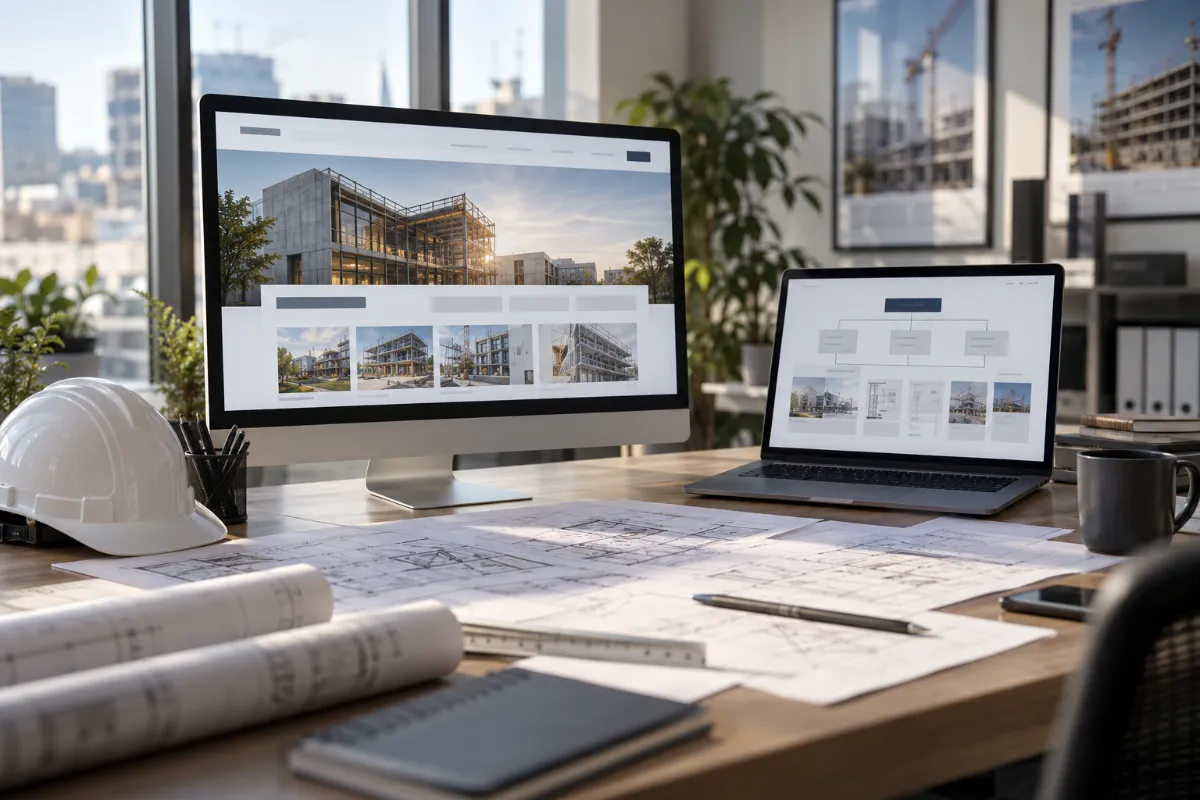
Construction Services: Explain What the Company Builds
Each significant service should have a dedicated page when there is enough distinct information to justify it.
For a residential construction company, this could include house extensions, renovations, loft conversions and new builds. For a commercial contractor, it might include commercial fit-outs, refurbishments, industrial works and specialist contracting.
Example of a useful service-page specification: A commercial refurbishment page can state the kinds of premises covered, typical project constraints such as phased works or occupied buildings, the information a prospective client should provide when enquiring, and links to genuinely relevant completed projects. This gives the page a distinct purpose beyond listing “commercial refurbishment” as a service.
The actual structure should follow the services the company genuinely provides.
Construction Projects: Demonstrate Relevant Experience
The portfolio should organise completed work by useful attributes such as project type or sector.
Individual project pages can explain the client’s brief, the work delivered, technical challenges, project photographs and confirmed outcomes.
Relevant service pages should link to corresponding project examples, while project pages should link back to the service undertaken.
Construction Sectors: Identify the Types of Clients Served
For companies operating across distinct markets, sector pages can explain experience with residential developments, commercial premises, industrial facilities or other relevant project environments.
A sector page should focus on the needs and project requirements of that audience instead of duplicating an existing service page.
Service Areas: Define Where the Company Works
Area information should reflect the company’s actual operating coverage.
For businesses with useful local experience, a location page may explain the local services provided and link to genuine projects undertaken in the area.
Not every town needs a separate page. Location-specific pages should exist only when they help customers make a meaningful decision.
About, Accreditations and Contact: Support Customer Confidence
The About page explains the people, experience and business behind the construction work.
Where relevant, a dedicated credentials section can present accurately described accreditations, insurance information and other supporting evidence.
The Contact page should make the next step easy, using the company’s preferred contact methods and a practical project enquiry form.
Website Hierarchy and Internal Linking
- Home → Construction Services → House Extensions → Relevant Extension Projects
- Home → Construction Services → Commercial Refurbishments → Commercial Project Examples
- Home → Construction Sectors → Industrial Construction → Relevant Industrial Projects
- Home → Service Areas → Actual Operating Location → Local Projects
Every supporting page should reinforce its parent category while answering a distinct customer need. In the live website, these relationships should be reflected through actual navigation and contextual links: a commercial refurbishment service page links to applicable completed refurbishments, each project links back to the relevant service, and sector or location pages link only to genuinely related work. Clear anchor text such as “commercial refurbishment projects” is more informative than repeated generic “learn more” links.
Practical internal-link check: Each main service page should be reachable from a relevant category or navigation page; each published project case study should identify the service it demonstrates and link back to that service; and the construction website design page should link to the real parent website design service and genuinely related SEO or PPC services where those pages exist. Confirm that these are clickable HTML links on the live site, not only words in a sitemap or a visual diagram.
Website Design for Different Types of Construction Companies
Construction website design requirements change according to the type of projects a company delivers and the people who commission those projects. The website structure is adapted to the company’s actual services rather than filling every page with generic construction-industry language.
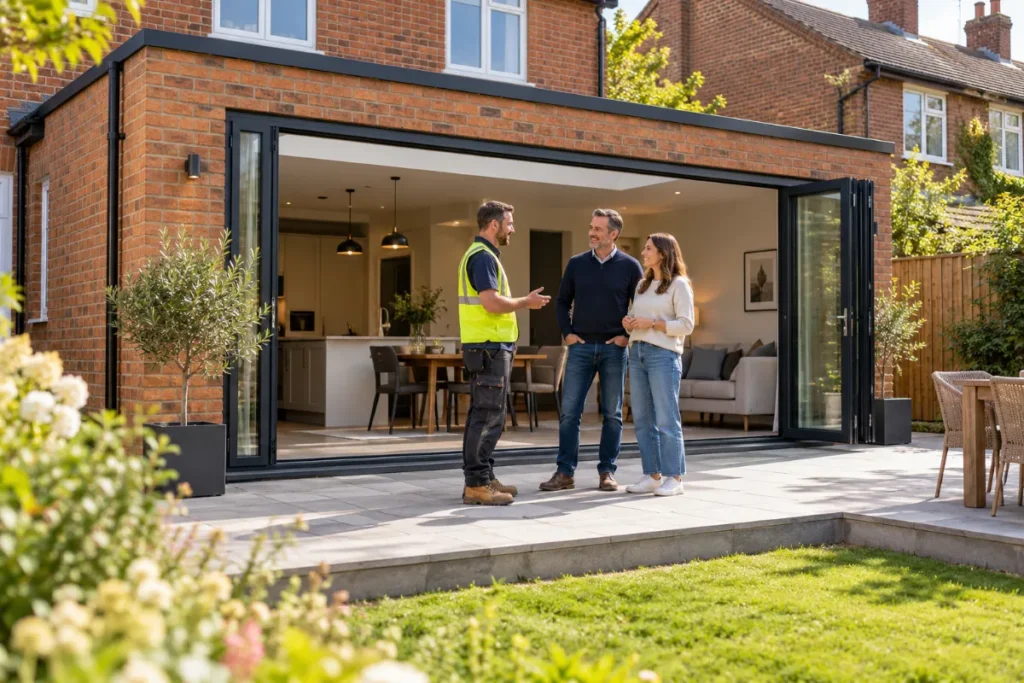
Residential Building Companies
Residential builders benefit from clear home improvement service pages, completed domestic project examples, homeowner testimonials and accessible quote requests.
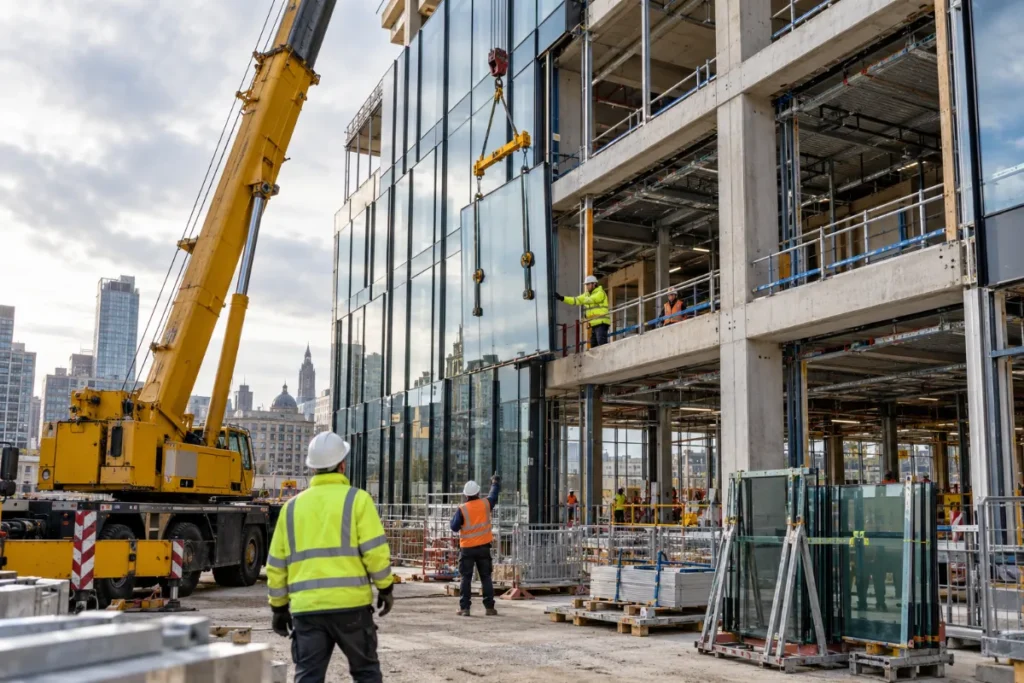
Commercial Construction Companies
Commercial contractors may need structured case studies, sector-specific experience, capability information and enquiry routes for commercial decision-makers.

Main Contractors
Main contractor websites can explain project delivery capabilities, completed work, the sectors served and the information relevant to potential clients and professional partners.
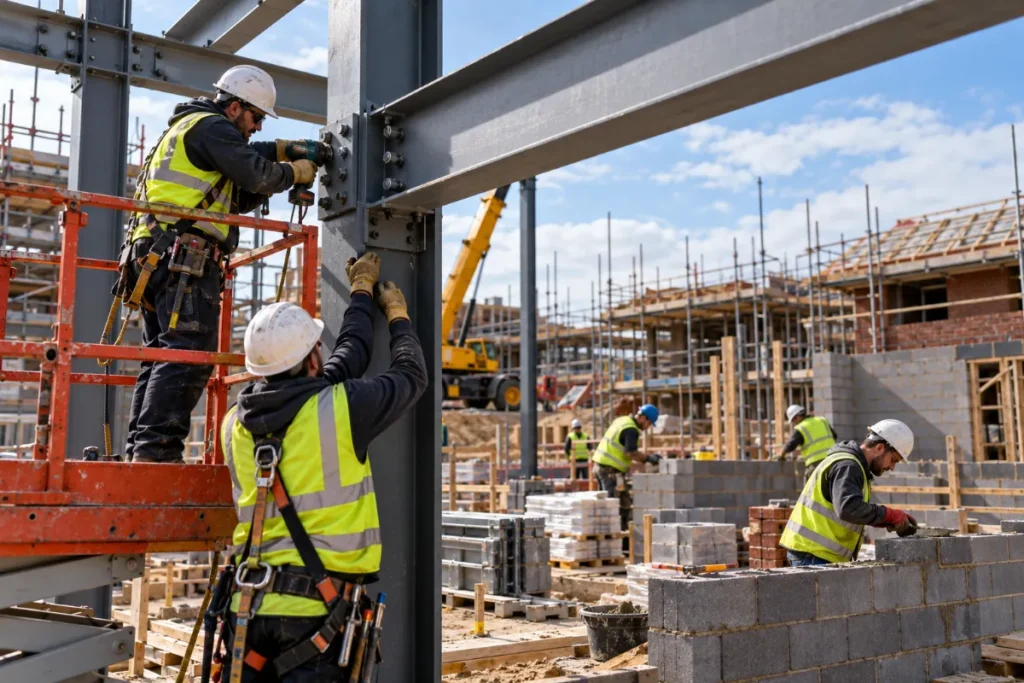
Construction Subcontractors
Specialist subcontractors need a website that clearly identifies their trade, project capabilities, relevant experience and the types of contractors or clients they work with.
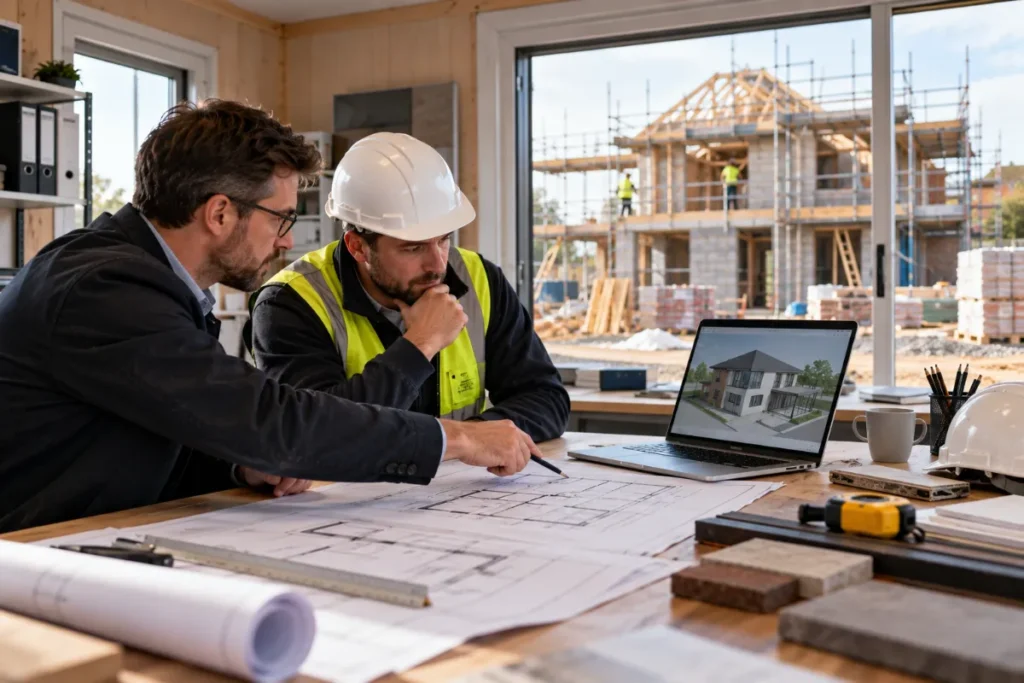
Design and Build Contractors
Design and build businesses may need to explain their integrated approach, project stages, professional involvement and relevant completed projects.
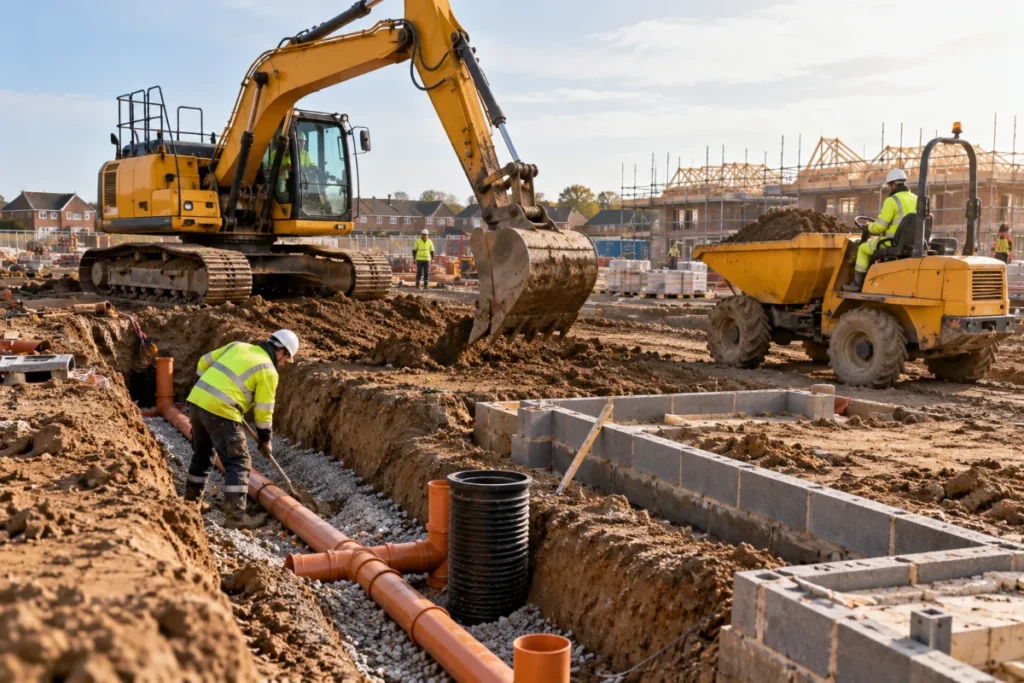
Groundworks and Civil Engineering Contractors
Groundworks and civil engineering websites can prioritise project capabilities, types of work, equipment where relevant, commercial project experience and appropriate safety information.
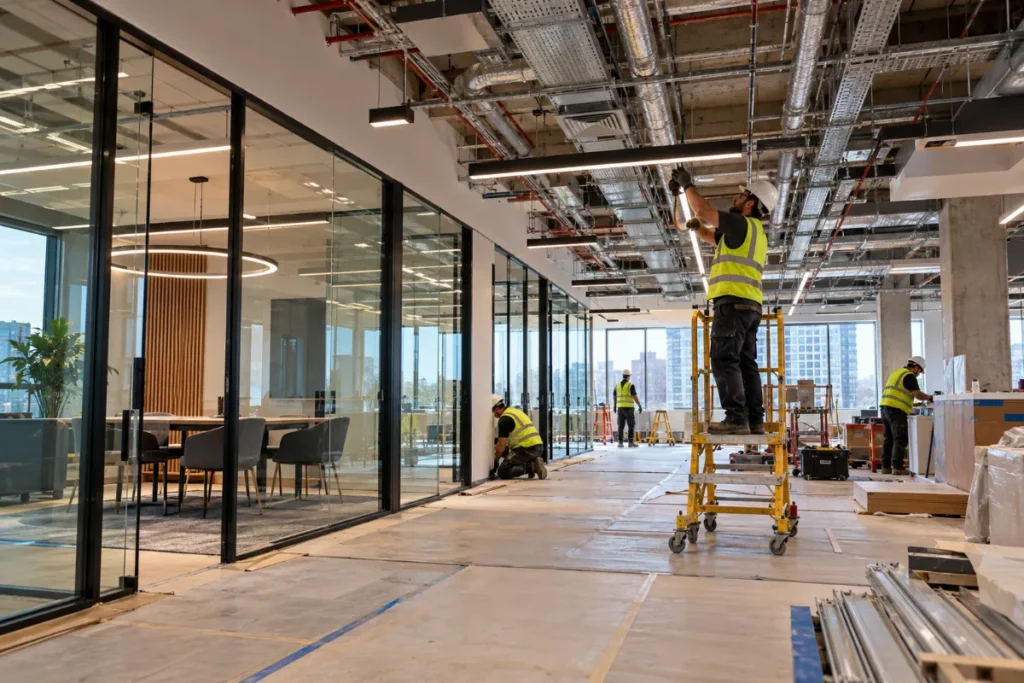
Refurbishment and Fit-Out Contractors
Refurbishment companies can present completed interiors, building upgrades, project constraints and experience working in relevant environments.
Our Construction Website Design Process
Our construction website design process takes your project from initial planning to final launch through seven clearly defined stages. Each step focuses on understanding your business, organising your services, showcasing your construction expertise and developing a professional, functional website that supports your business requirements.
Construction Business Discovery
We begin by understanding your construction company, the services you provide, the projects you undertake and the clients you want to attract. We identify your operating locations, business goals, website requirements and available project content. If you have an existing website, we also review its structure, performance and content to determine what should be retained, improved or replaced.
Website Sitemap and Content Planning
We plan a clear website structure that organises your construction services, completed projects, industry sectors, company information and contact options. Each page is assigned a specific purpose, ensuring visitors can easily find relevant information without navigating through repetitive or confusing content. This provides a logical foundation for presenting your expertise and guiding potential clients towards suitable services and project examples.
Wireframes and User Journey Design
Before visual design begins, we plan how visitors will navigate your website and interact with its content. Wireframes establish the positioning of navigation menus, service descriptions, project portfolios, enquiry buttons and contact forms. This helps create intuitive page layouts that guide potential clients from discovering your construction services to evaluating your experience and making an informed enquiry.
Visual Website Design
We develop a professional visual design that reflects your construction company’s branding, expertise and target audience. Typography, colours, imagery, spacing and page layouts are carefully selected to establish a consistent appearance across the website. The design prioritises clear communication, readable content and strong project presentation, helping visitors understand your capabilities without distracting animations or unnecessary visual elements.
Website Development and Content Population
Once the designs are approved, we develop them into functional, responsive web pages using the agreed website platform. Construction service descriptions, completed project photographs, company details and other approved content are added and organised within the site. We also implement the planned navigation, project galleries and enquiry features, ensuring the website functions as intended and reflects the approved design.
Quality Assurance and Testing
Before launch, we test the website across supported devices and screen sizes to identify usability issues and technical defects. Key checks include navigation, contact forms, internal links, responsive layouts, accessibility considerations and page performance. When replacing an existing website, we also review important URLs and redirects to reduce avoidable disruption and help ensure visitors can access the correct pages.
Website Launch and Handover
After final review and approval, we publish your construction website on the live domain and verify that essential pages, navigation and enquiry forms function correctly. We then provide the agreed website access and handover information, including guidance on managing content, ownership details and maintenance responsibilities. Any ongoing updates, technical support or additional services are clarified according to the agreed project scope.
Construction Website Structures
The following are illustrative website structures, not completed SEO for Trades UK client projects. They show how different construction businesses can organise relevant information without publishing unnecessary pages.
Residential Builder Website
A builder specialising in house extensions, loft conversions and renovations may need a homepage, individual service pages, an About page, a project portfolio grouped by service and a simple quotation form. An extension page should point to genuinely relevant extension case studies; the case studies should link back to the related service and explain the original brief, work completed, location where appropriate and photographs used with permission. This helps homeowners move from a search for a specific service to evidence of delivery and an enquiry.
Commercial Contractor Website
A commercial main contractor handling office fit-outs, refurbishments or industrial projects may need separate service pages, sector pages for genuinely different environments, detailed completed-project descriptions and an accessible commercial enquiry route. Capability information may explain experience with phased works, operational premises or subcontractor coordination, supported by real projects rather than broad claims. The structure should help property managers, developers and procurement teams locate relevant evidence quickly.
Specialist Subcontractor Website
A groundworks or civil engineering subcontractor may organise its website around actual capabilities such as excavation, foundations, drainage and site preparation. Each service can link to a relevant project, equipment or operational information where appropriate and a direct route for drawings or enquiries. Avoid claiming equipment capacity, certifications or completed projects that cannot be substantiated.
What a Real Agency Case Study Should Show
When published with client permission, a genuine construction website case study should identify the client’s construction specialism, original website challenge, work SEO for Trades UK performed, the finished site or authorised screenshots, and outcomes that can be checked. If figures are provided, state the measurement period and what was measured. Illustrative structures above must not be presented as actual commissions.
What Is Included in Your Construction Website Design Project?
The precise deliverables depend on the agreed website scope.
Website Planning Deliverables
These may include a website requirements document, proposed sitemap, page inventory, content requirements and wireframes.
Website Design Deliverables
These may include responsive page designs, reusable page layouts, navigation patterns, project portfolio presentation and enquiry form designs.
For clarity, a proposal can identify which layouts will be designed individually and which will use a reusable template. For example, a service-page layout might contain a service overview, relevant projects and a quote enquiry, while a project-page layout might include the project location, work undertaken, photographs and a link back to the associated service. These are potential layout components rather than an assertion that every quotation includes them.
Website Development Deliverables
These may include the agreed content management system, functional page templates, content population, contact forms and required integrations.
Website Launch Deliverables
These may include testing, essential technical configuration, redirects where applicable, website publication and handover.
Optional Additional Requirements
Additional service pages, extensive content writing, professional photography, multilingual functionality, bespoke integrations, hosting or ongoing maintenance should be identified separately where they are not part of the standard quotation.
Sample Deliverables Checklist for Comparing Proposals
| Item to Confirm | What the Proposal Should Specify |
|---|---|
| Page Structure | Number of unique templates, service pages, project pages, and sector or location pages. |
| Portfolio | Number of project entries included, who supplies photography, and who writes project descriptions. |
| Enquiries | Form fields, routing to the right contact, spam protection, and testing responsibility. |
| Search Readiness | Indexability checks, XML sitemap, canonical handling, internal links, and any migration redirects included in scope. |
| Ownership and Handover | Domain, hosting, CMS access, training, licences, and responsibility for ongoing updates. |
Why Choose SEO for Trades UK for Construction Website Design?
We plan construction websites around the services you genuinely provide, the projects you can evidence and the clients you want to attract, with a clearly defined scope from the start.
Construction-Specific Website Planning
We organise proposed websites around actual construction services, relevant completed projects, genuine operating locations and the customers a contractor wants to attract. This produces a clearer brief than starting with a generic agency template and changing only the company name.
Connected Services, Projects and Enquiries
We plan service-to-project links from the outset. An extension page should lead to comparable extension work; a fit-out page should make relevant commercial examples easy to find. Visitors can then move to the appropriate contact or quotation form. The final structure depends on what content the construction company can substantiate and supply.
Defined Scope and Practical Handover
A proposal should specify the pages and templates included, who supplies photographs and copy, relevant functionality, revision stages, testing and handover. Ask for examples of completed work and confirmation of who will perform the design and development. We do not treat illustrative examples as proof of completed client commissions.
How Much Does Construction Company Website Design Cost?
The cost of a construction company website depends on the size of the site, design requirements, content, functionality and the amount of development involved.
A small residential building company website typically has different requirements from a commercial contractor website with extensive sector pages, project case studies and additional integrations.
What Affects Construction Website Design Pricing?
Number of Pages
A website with a homepage, core services and contact page generally requires less work than a multi-service construction site with dozens of projects.
Design Complexity
Bespoke page layouts, interactive elements and specialised portfolio features affect design and development scope.
Content Requirements
Creating original service descriptions, preparing project case studies and organising photography increases the work involved.
Website Functionality
Advanced forms, system integrations, bespoke project filtering and additional content management requirements can affect price.
Existing Website Migration
Redesigning an established website may involve content migration, URL redirects and additional testing.
Maintenance Requirements
Hosting, updates, backups and ongoing support should be clearly identified in the quotation.
How Project Scope Changes the Quote
A smaller residential builder may need a homepage, a few distinct service pages, an About page, a modest portfolio and a contact form. A larger commercial contractor may require separate sector and capability pages, a searchable project portfolio, detailed case studies, more complex enquiry workflows and integrations.
Both are construction websites, but the second has more content, design and development requirements. These are illustrative scopes, not fixed packages or published prices.
Comparing Quotations Fairly
To compare quotations fairly, check the number of unique page layouts, total pages to be populated, who supplies the copy and photography, the form and portfolio functionality, testing and launch tasks, and what happens after handover.
Ask whether the quote covers design approval rounds, page population, project portfolio setup, form testing, basic analytics configuration, redirects from an existing site and handover training; these items are not automatically included in every proposal.
Request a Construction Website Design Quote
We recommend preparing a quotation based on your company size, required pages, existing content and website objectives rather than presenting an unsuitable one-size-fits-all package.
A useful quotation should show what is included, what is excluded, payment terms, estimated delivery stages and any recurring fees. It should distinguish one-off design and build costs from hosting, domain renewal, maintenance, copywriting, photography and optional integrations, where relevant. Any starting price or delivery timeframe should be published only if it reflects an offer the agency can actually honour.
Related Services for Construction Companies
Website design provides the structure and functionality through which potential customers learn about your construction business. Other services can support the website, but they serve different purposes and should be explained on separate pages.
Construction SEO focuses on improving the search visibility of relevant company, service and location pages.
Paid search campaigns can direct relevant visitors to appropriate construction service or landing pages.
If your business specialises in a particular trade rather than general construction contracting, a trade-specific website service may be more suitable.
Frequently Asked Questions About Construction Website Design
What is construction company website design?
Construction company website design involves creating professional websites for builders, contractors and construction businesses. It focuses on presenting services, showcasing completed projects, establishing credibility and making it easier for potential clients to explore your expertise and submit project enquiries.
What pages should a construction company website have?
A construction website should include a homepage, dedicated service pages, an About Us page, completed project portfolios and a contact page. Depending on your business, additional sector pages, project case studies and relevant service area pages can help demonstrate your capabilities.
What makes a good construction company website?
A good construction website combines professional design, clear service descriptions, high-quality project photography, trustworthy company information and straightforward enquiry options. It should also be mobile-friendly, easy to navigate and structured to help potential clients evaluate your experience and suitability for their projects.
Why are project portfolios important for construction websites?
Project portfolios showcase your completed work and provide evidence of your construction experience. Professional photographs, project descriptions and details of the work undertaken help prospective clients assess your capabilities, explore similar projects and develop confidence in your company’s expertise.
Can you redesign my existing construction company website?
Yes. We can redesign an existing construction website to improve its appearance, navigation, service pages, project galleries, mobile usability and enquiry process. We also review valuable existing content and URLs before rebuilding to help minimise unnecessary disruption.
Is WordPress suitable for a construction company website?
Yes. WordPress can be suitable for construction companies that want to manage service pages, update completed projects, add photographs and maintain company information. It provides flexible content management, although the right platform depends on your website’s functionality, security and maintenance requirements.
How long does it take to design a construction company website?
The timeline depends on the number of pages, design complexity, project portfolio requirements, content availability and additional functionality. We establish an estimated delivery schedule after reviewing your requirements and agreeing on the website’s scope.
How much does a construction company website cost?
Construction website design costs vary depending on the number of pages, custom design requirements, project portfolio size, functionality and whether the project involves a new website or redesign. We provide a quotation based on your requirements, outlining the agreed deliverables and any additional or recurring costs.
Get a Construction Company Website Built Around Your Work
Your website should explain what your construction company does, demonstrate the quality of your projects and give prospective customers confidence to make contact.
SEO for Trades UK can help you plan a construction website around the services you provide, the projects you deliver and the clients you want to reach. Whether you need a new website or want to improve an existing one, the starting point is understanding your construction business and defining the right website structure.
Tell us about your company, the construction services you provide and what you need from your website. If you have an existing site, include its URL; if you have completed-project photographs or a list of must-have features, mention these so the quotation can reflect the actual work required.